Every paid backlink that vanishes traces back to one decision: the seller you trusted with it. You can do everything else right and still lose the link if the person you bought it from was never going to keep their word. So the move that matters most in paid link building isn't picking the right anchor or the right page. It's picking the right seller, and knowing which of yours deliver.
The trouble is that a seller's sales page tells you nothing useful. Everyone promises "permanent", "high authority", "100% replacement guarantee". The words are free. What you need is a way to read a seller before you pay, spot the ones not worth the risk, and build a record of who keeps links alive after you've bought from them. Here's how to do all three.
One thing this article is not: a guide to judging whether a site is worth a link at all. Domain quality, traffic, and relevance are a separate question, covered in our backlink donor evaluation checklist. This is about the person selling the placement, and whether they'll honor it.
Why the seller is the real bet, not the link
When you buy a link, you're not really buying a line of HTML. You're buying a promise that the line stays where it's supposed to, in the form you agreed, for as long as you agreed. The link itself is trivial to place. The promise is the whole product, and the promise is only as good as the person making it.
This is why two links that look identical on day one diverge completely over a year. One seller keeps your placement up because their reputation depends on it. The other took your money, placed the link, and has no reason to think about you again. You can't tell them apart from the listing. You can tell them apart from how they behave, and from what their past links did.
What you can check before you pay
You can't measure reliability before you've bought, but you can read the signals that correlate with it. None is decisive alone; together they sort the serious sellers from the churn-and-burn ones.
- Will they put terms in writing? The single best test. Ask for the duration, the link type (dofollow or nofollow), the anchor, and the placement page in a written message before any money moves. A seller who commits in writing has given you leverage. One who stays vague "don't worry, it's permanent" has told you exactly how a dispute will go.
- Is the guarantee specific, or a slogan? "Replacement guarantee" means nothing without a window and a process. Ask: guaranteed for how long, and what do you do to claim it? A real guarantee survives that question. A marketing one falls apart.
- Will they show you the actual page first? Evasiveness about where the link will live is a red flag. A seller proud of their placements names the page. One who hides it until after payment is often placing links somewhere you wouldn't have agreed to.
- How fast and how straight do they answer? The pre-sale conversation is the best preview of the post-problem one. Slow, dodgy, or pushy answers now become slow, dodgy, or absent answers when a link drops and you need it restored.
- Does the price make sense? A link priced far below the market for its claimed quality usually isn't what it claims. Bulk-cheap placements are bulk-cheap to remove, too.
None of these proves a seller is good. What they reliably do is flag the ones to walk away from, before your money is on the line.
The signals you can only see after you buy
Pre-purchase checks are educated guesses. The real evidence arrives later, and it's the kind no sales page will ever show you:
- Do their links survive? Three months in, six months in, are the placements you bought from this seller still live, still dofollow, still pointing where they should? Survival is the truest measure of a seller there is — and it is hardest to read on niche edits, where a removal leaves the page returning 200 with your sentence quietly rewritten.
- Do they honor the guarantee when it's tested? A guarantee is just words until a link actually drops. The seller who restores or refunds without a fight has earned your repeat business. The one who suddenly can't find your order has shown you who they are.
- How do they respond when something breaks? The speed and honesty of a seller's reply to a recovery email tells you more than any testimonial. You learn the most about a vendor on the worst day, not the best one.
The catch is that this evidence is easy to lose. It's spread across months, order emails, and a vague memory that "that one seller is flaky". Unless you write it down, you forget which sellers burned you and buy from them again.
Build your own seller track record, because no one else will
Here's the uncomfortable truth about seller reputation in this market: there is no trustworthy public source for it. Link marketplaces show you the seller's own promises. Third-party review sites for link vendors are thin, gamed, or empty. The category leader in backlink monitoring has a marketplace-adjacent reputation built almost entirely on its own listicles, with barely a real review anywhere. Nobody is keeping honest score.
So the only reputation data you can trust is the data you generate yourself: which sellers you bought from, what those links cost, whether they survived, and whether the seller made it right when one didn't. Keep that record and a pattern emerges within a few purchases. This seller's links last; that one's drop and never get refunded. You stop guessing and start buying from evidence.
What a seller reliability score actually measures
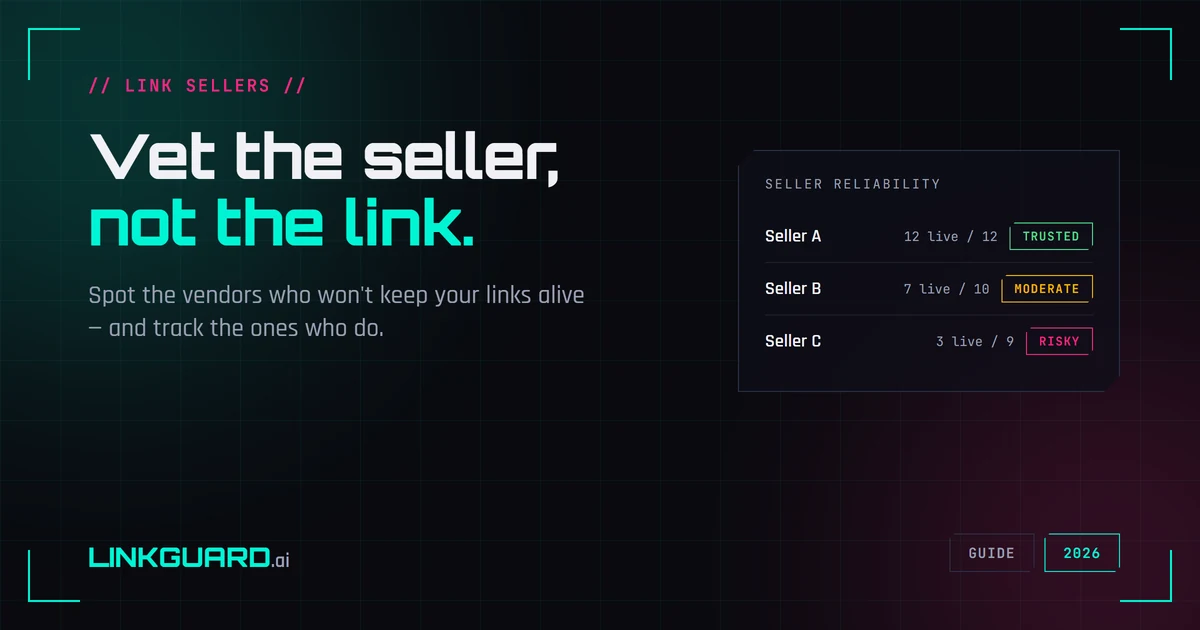
Doing this by hand is exactly the chore that never gets done, which is why we built it into LinkGuard's recovery ledger. When you record what each link cost and who sold it, and the monitor tracks whether those links stay live, the tool scores each seller from your own history. It counts how many links you bought from them, how many are still alive, how many dropped, how often a refund you asked for actually landed, and the dollars you've recovered.
From that it sorts each seller into a plain tier: trusted, moderate, risky, or new (too few purchases to judge yet). Here's the honest part, because it matters: this is your own track record, not a crowd-sourced reputation oracle. It says nothing until you've bought a few links from a seller and tracked how they aged. It can't tell you about a seller you've never used. What it can do is make sure that once a seller has burned you, you never accidentally fund them again, and that the vendor whose links always survive gets your next order. No marketplace will hand you that, because no marketplace has an incentive to.
Questions people ask
How do I know if a backlink seller is legit?
Before buying, the strongest test is whether they'll put the terms in writing: duration, link type, anchor, and the exact placement page. A seller who commits in writing and answers hard questions straight is worth a trial; one who stays vague or hides the page is not. After buying, the only real proof is behavior over time: do their links survive, and do they honor the guarantee when one drops? Track that and "legit" stops being a guess.
What are the red flags of a bad link seller?
Refusing to put terms in writing, a "guarantee" with no stated window or claim process, evasiveness about which page the link goes on, slow or pushy pre-sale answers, and a price far below market for the quality claimed. None is fatal on its own, but two or three together is a seller to walk away from. The pre-sale conversation previews the post-problem one, so treat dodgy answers now as a warning about later.
Are link marketplace ratings trustworthy?
Treat them with caution. Marketplace listings show the seller's own promises, and third-party reviews of link vendors are thin and easy to game. There's no reliable public reputation source for link sellers, which is why the data you generate yourself (which sellers' links survive, who refunds when one drops) is the only seller-reputation signal you can fully trust.
How many links should I buy from a seller before trusting them?
Enough to see a pattern, not so many that one bad seller drains your budget. A small first order, tracked closely, tells you how the seller behaves when a link is live and what happens if one drops early. Reliability only becomes meaningful after a handful of placements you've actually watched over a few months, so scale your spend with a seller as their track record with you earns it.
Can I track which sellers keep their links live?
Yes, and it's the single most useful thing you can do as a repeat link buyer. Record each link's cost and seller, monitor whether the links stay live, and note whether the seller restored or refunded any that dropped. Over a few purchases you get a real survival and refund rate per seller. LinkGuard's recovery ledger does this automatically once you log the cost and seller behind each monitored link.
Is it safe to buy backlinks at all?
That's a separate question from seller reliability, and an honest one to ask. Paid links carry their own risk independent of who sells them, and this article is about getting what you paid for, not about whether a given link helps or hurts your rankings. For judging whether a specific site is worth a link in the first place, see the donor evaluation checklist. Vetting the seller and vetting the site are both necessary; neither replaces the other.
Buy from evidence, not from promises
The sellers who keep your links alive and the ones who don't look identical on the day you pay. The only thing that separates them is a record of how they behaved last time, and that record is yours to build. LinkGuard monitors your bought links, ties each to its cost and seller, flags the day one drops, and scores each seller from your own history so your next order goes to a vendor you've already proven. Not ready to set that up yet? Start with the full paid-link recovery playbook to see how the pieces fit together. When you are ready, start free with 1,000 tokens and turn your link buying into something you can measure.
About the Author

Related Articles

Expired domain backlinks decay before the auction closes
Policy requires an expired .com to resolve to nothing for weeks before anyone can buy it. The links you're bidding on were counted before that, by a crawler that hasn't been back.

PBN backlinks don't fail one at a time
Google's spam documentation never uses the word. What a network link actually is in 2026, which footprints still identify one, and why four of them tend to go in the same week.
Directory submission in 2026: what a listing is actually worth
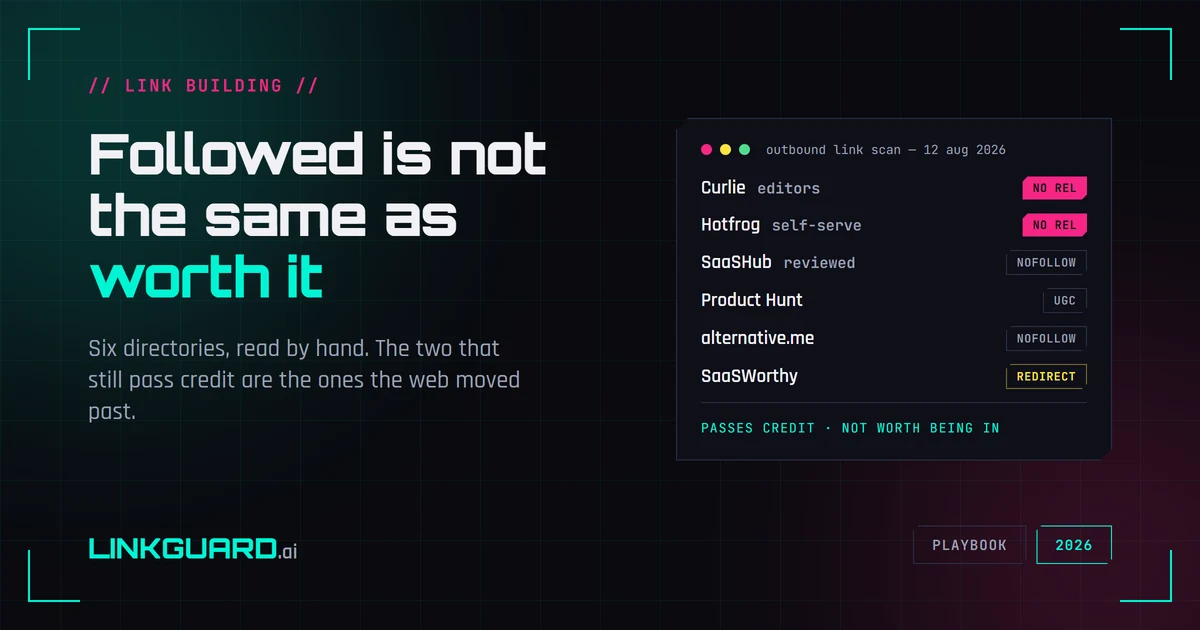
Google's spam policy names low-quality directory links as link spam. We opened six web directories and read the raw HTML: the two that still pass link credit are the general-directory survivors, while every vertical directory worth being listed in withholds it. What the tactic is still good for, and what to check once a listing is live.