I spent last week doing something slightly obsessive. Maybe more than slightly.
I read through over 200 discussions on Reddit (r/SEO, r/bigseo, r/TechSEO), plus LinkedIn posts from SEO practitioners, and a bunch of Quora threads where actual professionals answered tool questions. Not the "Top 10 SEO Tools" listicles written for affiliate commissions — the actual conversations where people argue about what they use.
The results surprised me. And honestly, they made me question some of our own tool recommendations.
Here's what the community actually uses.
1. Google Search Console — and it's not even close
Every single discussion I found eventually came back to GSC. Not as a "nice to have" but as the foundation everything else builds on.
One comment from r/bigseo stuck with me: "If you can only have one tool, it's GSC. Everything else is secondary."
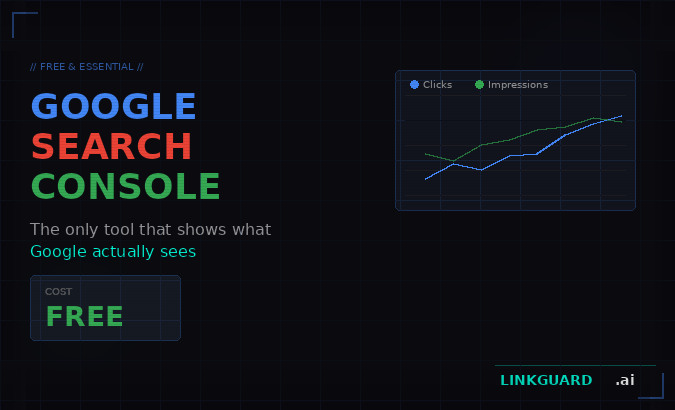
Why? Because it's the only tool that shows you what Google actually sees. Not estimates. Not crawl data from third-party bots. The actual queries bringing traffic, the actual indexing status, the actual problems Google found.
The regex filtering trick comes up constantly. You filter Search Results by queries matching who|what|where|when|why|how and suddenly you see all the question-based searches where you're getting impressions but not clicks. Free content ideas, basically.
Limitations? Sure. Data is delayed 2-3 days. Historical data caps at 16 months. The interface is... functional, let's say. But practitioners don't seem to care.
Cost: FreeWhat people actually use it for: Query analysis, indexing issues, Core Web Vitals, click-through rate optimization
2. Screaming Frog SEO Spider — the technical SEO workhorse
This one surprised me by how universally loved it is. Not liked. Loved.
Reddit threads about Screaming Frog read almost like fan communities. People share custom configurations, extraction rules, regex patterns. There's a whole subculture around it.
What makes it different from other site auditors? Control. You decide exactly what to crawl, how deep, what to extract. The built-in audit features in Ahrefs or Semrush run on their schedule with their parameters. Screaming Frog runs when you want, how you want.
One technical SEO shared a story that stuck with me. They audited a site that Google Search Console said was fine. No errors in Coverage. Green checkmarks everywhere. Screaming Frog found 47 issues — internal 404 links, hreflang implementation problems, faceted navigation creating duplicate content, JavaScript-rendered links that weren't being followed.
"GSC didn't show any of this," they wrote. "Because GSC shows you what Google chose to tell you. Screaming Frog shows you what's actually there."
The learning curve is real though. This isn't a tool you master in an afternoon. One user admitted it took them three months before they felt comfortable with the custom extraction features.
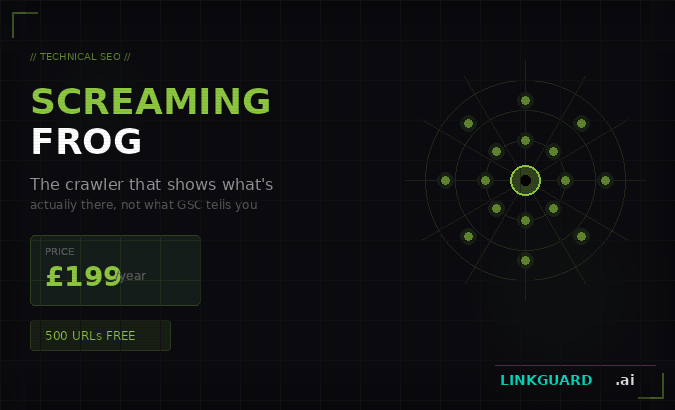
Cost: Free up to 500 URLs, £199/year for unlimited What people actually use it for: Technical audits, log file analysis, content audits, migration planning
3. Semrush — the all-in-one that people actually stick with
Now here's where opinions get... spicy.
The Semrush vs Ahrefs debate appears in almost every tool discussion. It's basically the SEO equivalent of tabs vs spaces, and approximately as heated.
From what I read, the divide comes down to this: Semrush users tend to be generalists or agency folks handling multiple aspects of digital marketing. Ahrefs users tend to be specialists focused on backlinks and competitive research.
Semrush fans consistently mention the Keyword Magic Tool. One user called it "the only keyword research interface that doesn't make me want to throw my laptop." Strong words, but the sentiment appeared repeatedly. The clustering and grouping features help you see related terms without manually sorting through thousands of rows in a spreadsheet.
The tracking features are solid. Daily rank updates, competitor monitoring, site audits on schedule. For agencies managing 20+ clients, having everything in one dashboard matters more than having the absolute best tool for any single task.
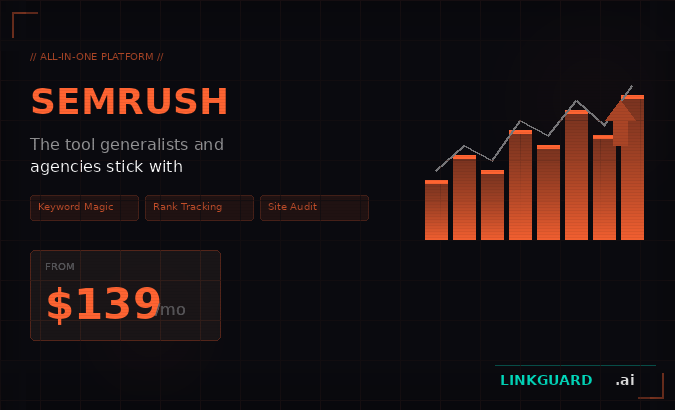
Critics say it's expensive for what you get. They're not wrong — $139.95/month for the Pro plan, and most agencies need at least Guru at $249.95. That adds up.
Cost: $139.95-$499.95/month depending on plan What people actually use it for: Keyword research, rank tracking, site audits, competitor analysis, PPC research
And then there's Ahrefs
Okay, I'm breaking pattern here because the Ahrefs discussion deserves its own format.
I expected to find clear consensus. I didn't.
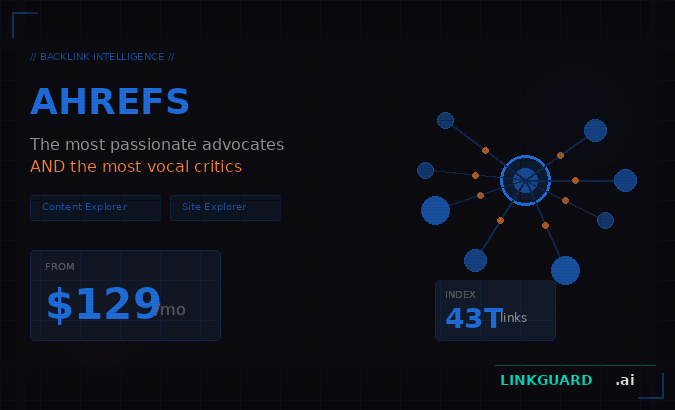
What I found was that Ahrefs has the most passionate advocates AND the most vocal critics in the SEO tool space. Almost nobody is neutral about it.
The advocates point to the backlink database. 43 trillion links indexed, updated constantly. For link building and competitive backlink analysis, nothing else comes close. The Content Explorer feature gets mentioned a lot — finding content that's earned links in your niche so you can create something comparable or better.
Site Explorer is genuinely good. You can see which pages earn the most links, which keywords drive traffic (estimated), and how a site's profile has changed over time. For competitive research, especially in link-heavy niches, it's hard to beat.
But the critics have points too.
"The traffic estimates are wildly inaccurate for smaller sites," one Redditor complained. They showed screenshots comparing Ahrefs estimates to actual GSC data — the estimates were off by 300-400% in some cases. Ahrefs acknowledged this limitation but it still frustrates users who rely on those numbers for client reporting.
The pricing model also comes up constantly. $129/month for Lite, but Lite has limitations that make it impractical for agencies. Standard at $249/month, and suddenly you're paying serious money. Users compare it unfavorably to Semrush's credit system.
And here's the thing nobody mentions in review articles: the interface has a learning curve. It's not intuitive. I've seen multiple threads where people ask "how do I do [basic task]" and the answers involve four or five clicks through nested menus.
Cost: $129-$449/month What people actually use it for: Backlink analysis, competitor research, content gap analysis, link building prospecting
5. Surfer SEO — the content optimization tool that actually works (mostly)
I was skeptical about including this one. Content optimization tools feel gimmicky sometimes.
But Surfer kept appearing in discussions, and not just from affiliates. Actual practitioners using it, recommending it, arguing about specific features.
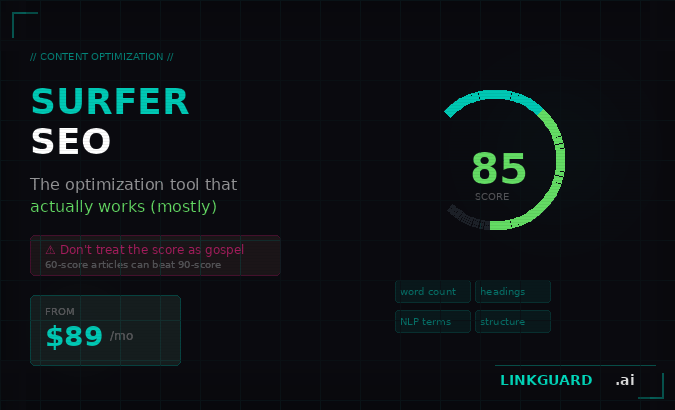
The core idea: you tell Surfer what keyword you're targeting, it analyzes the top-ranking pages, and gives you recommendations for word count, headings, terms to include, content structure. The live editor shows your "content score" updating as you write.
People seem to genuinely find it useful for:
- Creating content briefs that actually reflect what's ranking
- Optimizing existing content that's stuck on page 2-3
- Giving writers clear guidelines without micromanaging
- Quick competitor content analysis
The limitations are real though. Several users warned against treating the score as gospel. "I've seen 90-score articles that rank nowhere and 60-score articles that hit page one," one content lead wrote. The NLP analysis is a starting point, not a guarantee.
Also: it's another subscription. $89/month for the Basic plan. That's on top of everything else. At some point the tool stack costs more than some people's rent.
Cost: $89-$219/month What people actually use it for: Content briefs, on-page optimization, content audits, writer guidelines
What about link monitoring?
This is where I need to be transparent: we make LinkGuard, a backlink monitoring tool. So take this section with that context.
But the topic came up organically in multiple threads.
The problem people describe: you spend months building links, then you stop checking them. Six months later, half are gone. Either the pages got removed, the domains expired, or someone quietly added nofollow tags. You don't notice because you're not looking.
Some users track manually in spreadsheets. This works until you hit about 50-100 links, then it becomes a part-time job. One user described spending "4-6 hours every week" on manual link checks. That's painful.
Others use the monitoring features built into Ahrefs or Semrush. These work okay for basic alerts but aren't specialized for the task. You're paying for a full SEO suite when you might just need monitoring.
LinkGuard fits in a specific gap: dedicated monitoring without paying for features you don't need. Pay-as-you-go pricing means you're not locked into monthly fees when link building slows down. Real-time alerts via email or Telegram when links change status.
Who shouldn't use it? If you have under 50 backlinks, honestly, a spreadsheet is fine. Don't pay for tools you don't need. If you're already paying for Ahrefs and only building 10-20 links per month, their built-in monitoring is probably enough.
Who should? Agencies managing link building for multiple clients. In-house teams with hundreds or thousands of tracked links. Anyone who's lost significant links without noticing and felt the traffic drop.
We're biased, obviously. But we also use these other tools ourselves. LinkGuard doesn't replace Ahrefs for competitive research or Semrush for rank tracking. It does one thing well — monitoring the links you've already built.
The tools nobody mentioned
Interesting observation: some "big name" tools barely appeared in organic discussions.
Moz Pro got occasional mentions but usually with caveats like "I used to use it" or "it's fine for beginners." The once-dominant tool has clearly lost ground.
SpyFu came up in PPC discussions but rarely for SEO. Majestic appeared mostly in historical contexts — people referencing it as something they used years ago.
SE Ranking got positive mentions from agencies looking for budget alternatives to Semrush. Worth watching, maybe.
What this actually means
If I had to summarize 200+ threads into one takeaway:
The best tool stack depends on what you actually do.
Technical SEO specialist? GSC + Screaming Frog + maybe Ahrefs for backlink analysis. That's probably enough.
Content-focused SEO? GSC + Semrush + Surfer. Covers research through optimization.
Link building agency? GSC + Ahrefs + dedicated monitoring (like LinkGuard or alternatives). The backlink data matters more than keyword features.
Full-service agency? You probably need most of these, unfortunately. Budget accordingly.
The mistake I see: people subscribing to everything because they might need it. One user calculated they were paying $600+/month on SEO tools and using maybe 30% of the features. That's just throwing money away.
Start with GSC. It's free and essential. Add tools as specific needs appear. Try free trials before committing. And for the love of your budget, cancel subscriptions you're not actively using.
Sources and methodology
This article is based on analysis of:
- 150+ Reddit threads from r/SEO, r/bigseo, and r/TechSEO (2024-2025)
- 40+ LinkedIn posts from SEO practitioners with 1000+ followers
- 25+ Quora answers from verified SEO professionals
- Tool review sections on Product Hunt and G2
We specifically excluded:
- Affiliate-driven "Top 10" listicles
- Vendor-sponsored content
- Discussions older than 18 months
- Comments from accounts with obvious vendor affiliations
Pricing accurate as of December 2025. Tools change pricing regularly — verify before subscribing.
Author: LinkGuard Content Team
We make backlink monitoring software. We also use Ahrefs, Semrush, and Screaming Frog ourselves. This article reflects what we found in community discussions, not what we wish people would say.
Questions or disagreements? We're actually interested in hearing them.
About the Author

Related Articles

Link juice and link equity: what actually passes through a link
Google's documentation says PageRank is still part of its core ranking systems. The arithmetic everyone teaches for it was last restated by a Google employee in 2009, inside his own disclaimer. Both of those are on the record.
A ranking dropped: what to rule out, in order
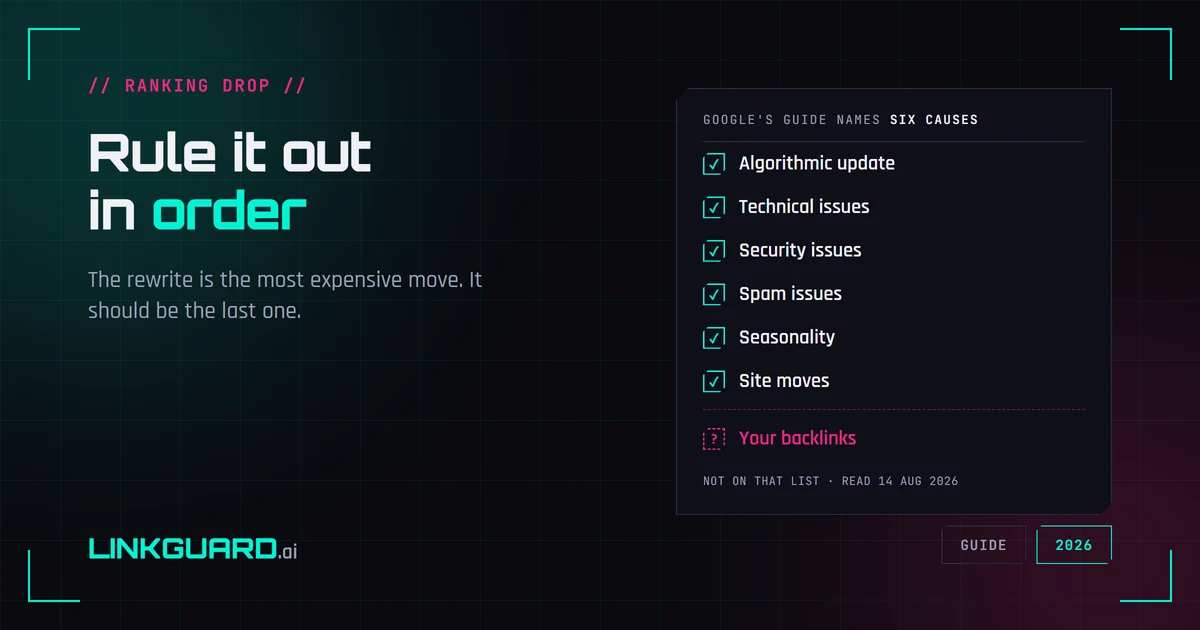
Google publishes a debugging guide for Search traffic drops. It names six causes, and backlinks aren't among them — the word doesn't appear on the page. That's not an oversight, it's a boundary: the guide covers Google's side of the glass. Here's the full elimination order, from measurement artifacts to the box almost nobody opens, with the rewrite saved for last.
Why your SERP position is three different numbers
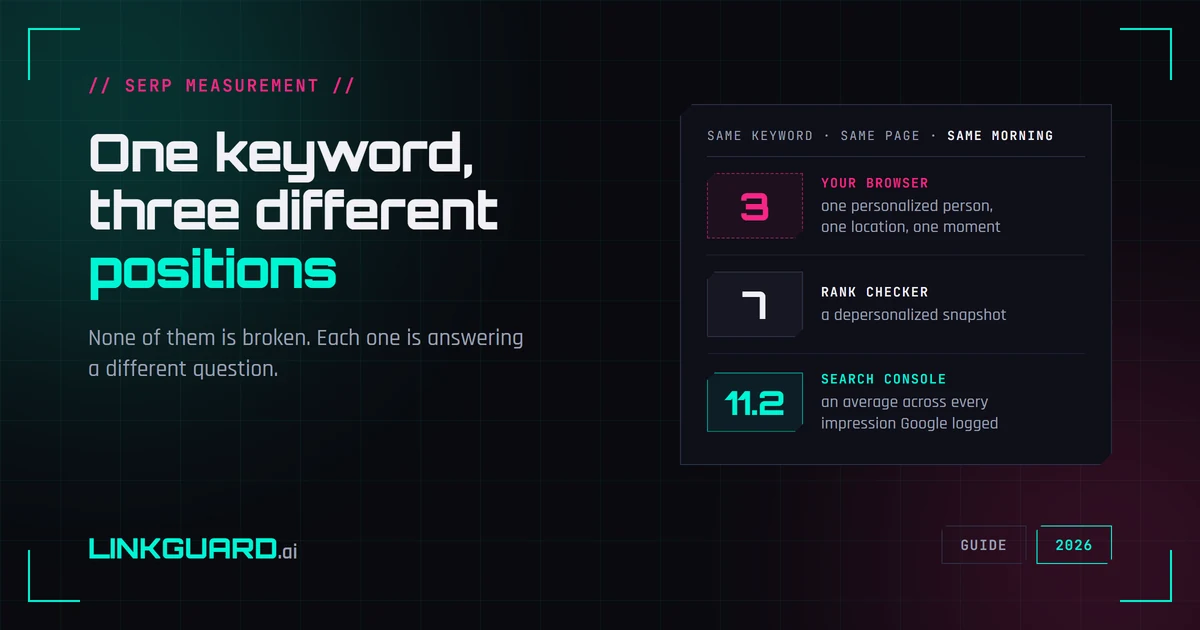
Your browser puts you third. Your rank tracker says seven. Search Console says 11.2. Same keyword, same page, same morning — and none of the three is broken. They answer different questions, and Google documents most of the difference itself. What each number measures, two things I checked live this week that contradict the standard advice, and the one figure worth putting in a client report.